Issue No. 163
Time: 15:00 p.m. on November 11, 2025
Location: B-518 Lee Shau Kee Building of Science and Technology
Host: Prof. Chao Sun
Abstract:
We show how to apply optimal control theory to catch a passive drifting target in a turbulent flow by an autonomous flowing agent with limited maneuverability. For the case of a perfect knowledge of the environment, we show that Optimal Control theory can overcome chaotic dispersion capturing the Lagrangian target in the shortest possible time [1]. We also provide baselines using heuristic policies based on local-only hydrodynamical cues [2]. How to extend this approach to model-free Reinforcement Learning tools is also briefly discussed [3]. Data are open downloadable from TURB Lagr [4], a database of more than 300K three-dimensional trajectories of tracer particles advected by a fully developed homogeneous and isotropic turbulent flow.
Introduction of speaker:
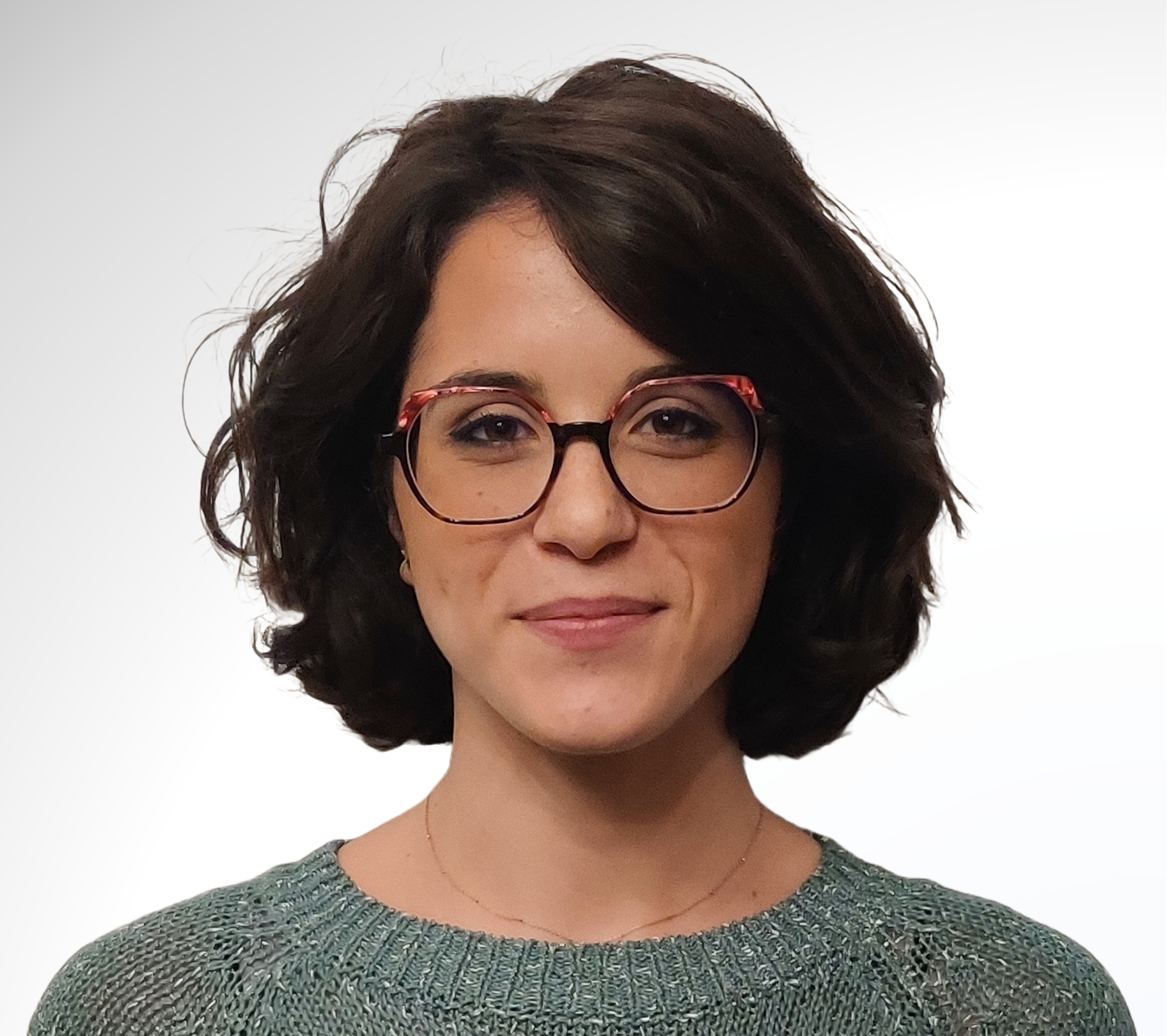
Dr. Chiara Calascibetta is a postdoctoral researcher at the Inria research center d'Université Côte d’Azur (France). She completed her academic path at the Department of Physics of the University of Rome Tor Vergata, earning her PhD in December 2024. Her research interests lie in statistical mechanics and dynamical systems, with a particular focus on complex systems and turbulence. Specifically, she has investigated optimal control techniques for the transport of active matter in turbulent flows. Throughout her academic career, Chiara has received several prestigious awards. In 2021, she received the Enrico Persico Scholarship by the Acc. Nazionale dei Lincei (Italy), recognizing the best physics students from the universities of Rome. In 2022, her master’s thesis received the Milla Baldo Ceolin Award – Women inTheoretical Physics Prize from INFN, acknowledging it as one of the best master's theses in theoretical physics. In 2023, she received the EUROMECH Young Scientist Prize at the 18th European Turbulence Conference for the best scientific presentation by a young researcher under 35. Most recently, in January 2025, she was awarded the Socint-G-Research Prize for the best Italian PhD theses in quantitative fields.
审核:刘有晟、游小清