Issue No. 172
Time: August 7, 2026, 15:00
Location: B-515 Lee Shau Kee Building of Science and Technology
Host: Prof. Xuefei Xu
Abstract:
Aqueous interfaces play a central role across chemistry, biology, and materials science, yet the microscopic origins of their unique physicochemical properties remain incompletely understood. In particular, it remains an open question whether the apparent enhancement of chemical reactivity at water interfaces is driven primarily by large interfacial electric fields or by the distinct solvation environment experienced by molecules at the surface. In this talk, I will present recent theoretical and computational studies from our group that revisit this question from several complementary perspectives. I will first discuss joint experimental and simulation studies of dipolar surfactant soap films, where a highly polarized interfacial water layer with an unexpectedly low dielectric response gives rise to exceptionally large macroscopic electric fields. I will then show that, despite the growing emphasis on electric fields in explaining interfacial reactivity, molecular simulations combined with data-driven approaches reveal that the local electric field is largely determined by the instantaneous hydration environment, suggesting that electric fields are not independent drivers of reactivity but rather emergent manifestations of the local solvation environment. Finally, I will conclude by presenting preliminary results on the photoinduced chemistry of phenol at aqueous hydrophobic interfaces, highlighting new directions toward understanding how solvation, molecular fluctuations, and electronic structure collectively govern chemical transformations at water interfaces.
Introduction of speaker:
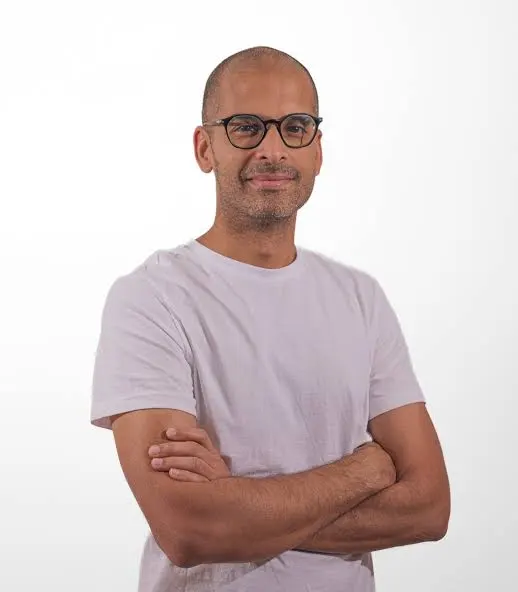
Ali Hassanali is a Senior Research Scientist at the Abdus Salam International Centre for Theoretical Physics (ICTP). His research lies at the interface of physics, chemistry, and biology, with a particular focus on the physical chemistry of liquids, aqueous systems, and biomolecular processes. He earned his Ph.D. in Biophysics from The Ohio State University in 2010, completed postdoctoral training at ETH Zürich with Michele Parrinello, and has been leading an independent research group at ICTP since 2015. His work combines classical and first-principles molecular simulations with machine learning to investigate the structure, dynamics, and electronic properties of complex molecular systems.
审核:刘有晟、游小清