Issue No. 179
Time: November 23, 2026, 10:00am
Location: A-559 Lee Shau Kee Building of Science and Technology
Host: Prof. Xuefei Xu
Abstract:
Ring-polymer instanton theory is a quantum transition state theory that calculates tunneling rates by optimizing the minimum-action tunneling path (instanton) and elucidates the underlying mechanism. When combined with ab initio methods, it enables exploration of tunneling in chemical reactions of larger molecules. In recent years, by advancing instanton theory methods and integrating then with cutting-edge machine learning tools and high-precision electronic structure calculations, we have made notable progress in tunneling simulations. Furthermore, the instanton theory framework can be extended to the simulation of complex nuclear quantum effects, such as non-adiabatic tunneling and tunneling splitting, while maintaining a favorable balance of reliability and efficiency. Recently, we developed an instanton-based approach to obtain centroid free energies efficiently and introduced isotopic entropic path-integral coarse-graining (iso-EPIGS) to learn the resulting surface. The machine learning architecture design uses entropy and quantum kinetic energy to supervise the temperature and mass dependence of the centroid surface, respectively. Tests demonstrate that the new method is robust and efficient, capable of rigorously computing quantum thermodynamic properties, including isotope effects on acid dissociation, the thermodynamics and isotope fractionation of liquid water, and the Ubbelohde effect in crystalline oxalic acid, at the cost of classical MD. This method has the potential to become a new paradigm for quantum effect simulations in the era of artificial intelligence, replacing the currently complex and computationally expensive path integral molecular dynamics simulations.
Introduction of speaker:
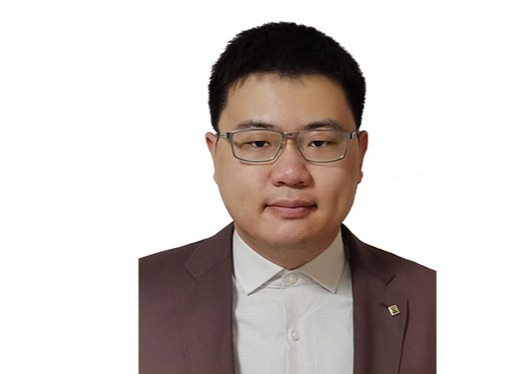
Wei Fang graduated from Peking University in 2013 with a Bachelor’s degree in physics and earned his Ph.D. degree at University College London (UCL) in 2017. From 2018 to 2020, he served as a postdoctoral researcher at ETH Zurich, Switzerland. He then worked as a visiting scholar at the Dalian Institute of Chemical Physics, Chinese Academy of Sciences, from 2021 to 2022. In 2022, he joined Fudan University as an associate researcher at the department of chemistry, where he conducts research in molecular simulations within the field of physical chemistry. Wei’s main research interest focus on understanding nuclear quantum effects and the development of path integral based methods.
审核:刘有晟、游小清