Issue No. 166
Time: March 25, 19:20
Location: B-518 Lee Shau Kee Building of Science and Technology
Host: Prof. Yixiang Shi and Prof. Ran Sui
Abstract:
The talk focuses on alternative electro- and thermo-catalytic pathways for the production and decomposition of ammonia related to its use as carrier of renewable energy. Recent advances in electrocatalytic ammonia synthesis in proton-conducting ceramic cells (PCCs) are discussed with a focus on iron- and ruthenium-based electrodes. The effects of temperature, gas flow, voltage, and electrolyte thickness on electrochemical ammonia synthesis are investigated. To differentiate the various effects and mechanisms contributing to the electrocatalytic formation of NH3, different gas flow configurations are studied. The experimental results demonstrate that NH3 formation is primarily governed by the applied cell voltage, while the current density plays only a minor role. A strong interaction between electro- and thermo-catalytic reactions occurs. Co-feeding H2 at the cathode proved advantageous for optimizing reaction conditions and increasing ammonia synthesis rates to values of 3×10⁻⁸ mol s−1 cm−2 using a PCC with an iron-based electrode of an active area of 12.57 cm2; both values are much higher than reported in literature before. Also, decomposition of NH3 to H2 can be conducted in PCC. In all cases both electro- and thermos-catalytic processes have to be understood. The combination of thermo-catalytic and electrochemically supported ammonia synthesis and decomposition opens new pathways for the electrification of NH3 production using the rather inexpensive material iron and the use of NH3 as hydrogen carrier.
Introduction of speaker:
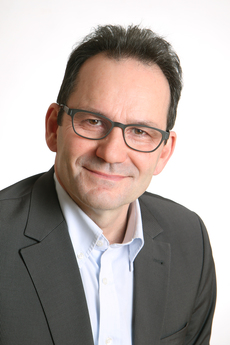
Professor Olaf Deutschmann holds the Chair of Chemical Technology at the Karsruhe lnstitute of Technology(KiT) in Germany, He also serves as director of the institute for Chemical Technology and Polymer chemistry, aswell as the lnstitute of Catalysis Research and Technology at KlT. His research focuses on the development oclimate- and environment-friendly chemical technologies, along with novel digitalization tools. His current researcltopics include carbon capture, carbon-free chemical energy, emission control, fuel and electrolysis cells.an0 t26circular economy. Prof. Deutschmann studied physics and chemistry in Magdeburg, Berlin and Heidelberg..earned his PhD in 1996, supervised by Prof. jurgen Warnatz. He conducted postdoctoral research at theUniversity of Minnesota with Prof. Lanny Schmidt and at Los Alamos National Laboratory. After receiving theHabilitation from Heidelberg, he joined KlT as the founding director of both the Emission Control Center and theEnergetic Materials Lab. He has published over 370 peer-reviewed journal papers with H-index 77, and deliveredmore than 100 invited lectures and seminars, including the Distinguished Lecture Series at UC Berkeley. He hasreceived the DECHEMA Award, the Hermann Oberth Medal, and is a Fellow of the Combustion institute.
审核:刘有晟、游小清